
- News
- Business News
- India Business News
- NEFT transactions to be made available 24x7, other important steps taken by RBI
Trending
This story is from August 7, 2019
NEFT transactions to be made available 24x7, other important steps taken by RBI
The Reserve Bank of India (RBI) on Wednesday announced that National Electronic Funds Transfer (NEFT) payment system "will be made available on a 24x7 basis from December 2019." Currently, the NEFT system, operated by the RBI as a retail payment system, is available from 8am to 7pm on all working days of the week (except 2nd and 4th Saturdays of the month).

(Representative image)
Top Picks For You
EMIs set to fall as RBI goes for fourth straight rate cut
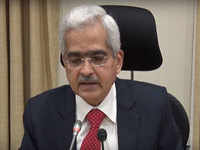
"The step is expected to revolutionise the retail payments system of the country,” RBI governor Shaktikanta Das said while addressing the media after the August monetary policy review.
The announcement comes in line with RBI’s Payments Settlement Vision 2021 where it was first proposed to make all NEFT and RTGS (Real-Time Gross Settlement) transfers round the clock for customers and free for all.
The RTGS system is meant for large-value instantaneous fund transfers, while the NEFT system is used for fund transactions of up to Rs 2 lakh.
In another development, the RBI has decided to allow all categories of billers except prepaid recharges under the Bharat Bill Payment system (BBPS).
"The BBPS, an interoperable platform for repetitive bill payments, currently covers five segments viz., (i) direct-to-home (DTH); (ii) electricity; (iii) gas; (iv) telecom; and (v) water bills. In order to leverage the advantages of the BBPS and harness its full potential, it has been decided to permit all categories of billers (except prepaid recharges) who provide for recurring bill payments to participate in BBPS on a voluntary basis," the RBI stated.
It also decided "to offer 'on tap' authorisation to entities desirous to function/operate/provide platforms for Bharat Bill Payment Operating Unit (BBPOU); Trade Receivables Discounting System (TReDS); and white label ATMs."
The Reserve Bank added that "the detailed instructions will be issued by the end of September 2019."
Further, the RBI proposed to create a Central Payments Fraud Information Registry "to improve the confidence of customers in the payment systems."
"The Payment System Vision 2021 also envisages a framework for collecting data on frauds in the payment systems. In order to carry forward these efforts and ensure quick and systemic responses, it is proposed to facilitate the creation of a Central Payment Fraud Registry that will track these frauds," the RBI said.
Meanwhile, the Reserve Bank in its August bi-monthly policy meet reduced repo rate by 35 basis points to 5.40 per cent. Repo rate is the rate at which the RBI lends money to banks. This is the fourth straight rate cut from the RBI.
End of Article
FOLLOW US ON SOCIAL MEDIA









Hot Picks
TOP TRENDING
Trending Stories
In Business
Entire Website
- Will banks open only for 5 days a week? Here’s what you should know about IBA’s proposal
- India set to be third largest economy, says S&P Global
- Dalal Street bull run continues! BSE Sensex crosses 69,000 for the first time; Nifty above 20,800
- Byju’s reduces notice period for employees as troubles mount
- Sensex surges over 900 points, Nifty above 20,550 as BJP state election wins bolster Modi's Lok Sabha 2024 prospects
- UltraTech to buy building materials business of Kesoram in 7,600 crore deal
- Tata Technologies stock debuts at a bumper 140% premium; share price at Rs 1200 on BSE
- Tata Technologies share allotment: How to check IPO allotment status, listing date, GMP
- BSE m-cap rides rally in Adani stocks, tops $4 trillion
- Charlie Munger, who helped Warren Buffett build Berkshire, dies at 99
- 'Actions will certainly have consequences': S Jaishankar warns Pakistan at UNGA
- SpaceX launches rescue mission for stranded Wilmore, Sunita Williams
- Why Trump wants to take back to the US these 5,000 Pune jobs
- Israeli PM Netanyahu says 'we settled the score' with Nasrallah's killing
- MK Stalin promotes son Udhayanidhi as deputy CM of Tamil Nadu
- Who is Hashem Safieddine, the cleric likely to head Hezbollah after Nasarallah
- How a Bihar festival to pray for children’s long life led to 37 deaths
- Zomato co-founder Arkriti Chopra resigns: Read 'resignation email' to CEO
- Dhoni to be 'uncapped' player as IPL retention rules announced
- Pittsburgh Steelers Embrace Justin Fields as starting quarterback


Popular Categories
Hot on the Web
Top Trends
Trending Topics
Devara CollectionNavya Naveli NandaPawan KalyanJungle SafariStree 2 OTT ReleaseRose GardenDevara CollectionOTT Release MovieMasala OmeletteEmergencyDevaraTaaza Khabar 2 Twitter ReviewDevara Movie ReviewHealthy RaitasSwatantrya Veer SavarkarColdplay India tour 2025Smartphone DealsApple Macbook Air M1Amazon SaleWordle Answer
Living and entertainment
Latest News
WWE Superstar The Rock's Daughters: Everything You Need to Know About Simone, Jasmine, and TianaThe Power of Color: Zodiac Signs and Their Energetic HuesAir Arabia launches early bird promotion on 500,000 seats from INR 5,727!'That was the last time I saw my friend': Rahul Gandhi remembers Sitaram YechuryTulsi Gabbard calls Kamala Harris shameless as VP inspects US-Mexico border: 'No conscience'Guneet Monga says, 'films with American distributors should be sent for competition'Scrap dealer dad celebrates son's board exam success by gifting multiple iPhones | Watch videoForeign investment hits record high with Rs 23,600 crore inflows this weekWatch: Pakistan Test team head coach Jason Gillespie to make changes only after...Queen Camilla does not want King Charles to meet Prince Harry because...Congress leader Pawan Khera asserts people of Haryana want change ahead of assembly electionsChennai corporation raises property tax by 6%, oppn sees redHow Nick Sirianni's game-changing call turned out to be a turning point in Parris Campbell’s careerChennai corporation allows private burial grounds, crematoriums to avoid crowdingZodiac Signs as Barbie Dolls: Finding Your Cosmic DollAnupam Kher, Ranvir Shorey express their delight as Khosla Ka Ghosla returns to theatres after 18 years: 'A new generation will experience its magic'Money mania! For IPL players, Jay Shah introduces a whopping match fee of Rs...Grab incredible deals on industrial tools, medical supplies and much more during Amazon Great Indian Festival 2024
Copyright © 2024 Bennett, Coleman & Co. Ltd. All rights reserved. For reprint rights: Times Syndication Service